


10 Years of Acid Test!

Friday, January 22nd was the 10 year anniversary of our first day of shooting for Acid Test, the short film that was later adapted into my first feature film.

Below is the Substack our Writer/Director Jenny Waldo wrote in honor of the momentous occasion that was also shared on our social media:
There seems to be a lot of interest in 2016 for whatever reason, but anniversaries always get me reflecting. A decade feels like a significant chunk of time and these past ten years have seen a significant shift in my career.
10 years ago, I took a leap. I wanted to push my career to the “next level” (whatever that meant). It had been a little over a decade since I graduated from USC School of Cinematic Arts with my MFA in Film Production and while leaving Los Angeles still created “what if” scenarios in my mind, but I had used that time to do a 12-part docu-educational series for a Montessori school, another documentary short to promote a local non-profit, write/direct a short film Sisters, produce two other shorts, work with the film non-profit Southwest Alternate Media Project (SWAMP), start adjuncting at Houston Community (now “City”) College’s Filmmaking Program while raising young kids, getting divorced, and learning to love Houston.
Back in 2016, I was ready to fully invest in my voice as an artist/filmmaker and my main goal was to get a short onto the film festival circuit. In looking back, I realized I had abandoned my USC graduate thesis film after it didn’t get into Sundance or land me representation after its DGA First Look Screening and I had missed out on connecting with so many people at all levels of the festival circuit that I saw my friends doing and benefitting from. It was honestly egotistical and entitled but I was finally getting over myself!
The origins on Acid Test started when I went to Cannes Film Festival in May 2015, so a little before this decade started. One of the shorts I produced, an avant garde film with a fully-nude simulated sex scene (that was interesting to cast for!) with first-time writer/director Alberto Govela, Next Exit, was accepted at the Cannes Short Film Corner. I was not going to turn down an opportunity to go to one of the premiere film festivals in the world! I arranged for my mother-in-law to come help with my husband and kids and I think my dad had some miles I used and I was off to France!

It’s interesting thinking about this as I head to Sundance 10 years later (without a project and just to network) because when you see films at this level, with these resources, the intensity, rawness, and absolute commitment is tangible. No one is phone-ing it in. These aren’t rinse-recycle-repeat projects, but ones forged from a burning desire, an intense need, that is clear as day. I’m not saying that all films at Cannes or Sundance are the best movies ever or that other movies rejected by these festivals aren’t deserving of this same platitude. But collectively, there is that “something special” and when I was at Cannes, it felt like I was seeing blood in the water - every film was a sacrifice of some kind. You don’t make this kind of art without being forever changed. And I bring this up because in all honestly, that level of sacrifice scares me. And things that scare me are always things I want and need to do in order to grow, but they scare me all the same.
It was this fear that led to Acid Test. In watching movies and listening to panels and seeing all these people, I started to think what I might be able to contribute at this level. I was walking home one night with my Director and my co-Producer (his wife) Mariella to our shared apartment rental and I started telling them this story from my former life as a high school delinquent when I dropped acid (lsd) at a concert and then, after a failed attempt to try to sleepover at a friend’s house, found myself at home with my parents with several more hours of my “trip” to go. I ended up telling my parents that I was tripping and my dad proceeded to yell at me and tell me that my children would have birth defects and they were going to call the cops on me and get me expelled from my new private school (that they had forced me to transfer to). I told my dad that his ranting “could really mess me up” since I was hallucinations and then proceeded to concentrate on all the cool things the rug was doing. I also had so so sososososo many thoughts running through my head and those thoughts were becoming text that was forming in front of my eyes and I just wanted to write it all down. So I asked my parents for paper and a pen. “No!” I was adamant that I needed to write this stuff down so I kept asking and eventually I remember asking for a crayon as my last ditch attempt and I found that rather funny. My parents were not so easily amused. Since becoming a parent myself, I certainly have more appreciation for their perspective and how scary this must have been for them, and as I told this story to my friends in Cannes, the question of what my parents would think if I made a movie about this night of my life was one that scared me the most. We’re the type of people to sweep things under the rug and carry on without ever mentioning anything ever again.
The story from 1992 was one that I felt defined me in many ways. One, the fact that even being out of my mind on hallucinogens I wanted to write and capture this moment was incredibly rooted in my sense of identity as a writer and storyteller. Two, I had always struggled with being labelled a “female” filmmaker. When I was younger, I naively thought we were past all that gender disparity stuff, and I never saw myself as different than my male counterparts and the thought didn’t even occur to me that they might see anything different in me. With experience and time, my views on this changed and realization dawned, but I still struggled with it because I didn’t identify with many of the higher-profile female filmmakers or their stories. I’m not a huge Jane Campion fan, for example, and there are many female filmmakers and their movies who I think suffered under the same sexism that brought us the “strong female” stories where women are strong and beat up men and look sexy doing it or are the “manic pixie dream girl” silent and reacting to all the crap thrown their way. I digress. My point is that I was inspired by Riot Grrrl music as a teen in the early 90s and I hadn’t seen a lot of punk girl stories. This was before Bikini Kill went on their reunion tour. No one had heard of Riot Grrrl except people doing Women’s Studies since it was now called “Third Wave” feminism and was part of history, which meant I was officially old. What i’m trying to get to is that I wanted to see women like myself.
So back to my story…I’m in Cannes, I’m telling this story to Alberto and Mariella and Mariella surprises me by saying she had a similar experience when she was young. And the more I tell people this story, the more people tell me they had something similar happen to them. Always slightly different, but something was resonating with people as I shared my story and I kept saying I thought it would make a good short film. And I had a number of other similarly uncomfortable and traumatic family experiences/stories from this tumultuous period in my life that I knew I could make a feature that people would relate to. So I put myself on the short-to-feature path.
I had some money left over from my divorce, that I considered blood money and mine to do something important with, and we did some light fundraising with SWAMP as our fiscal sponsor, which was enough to get us through production. By fall, I had a producer, was scouting locations, and casting; by January we were shooting.
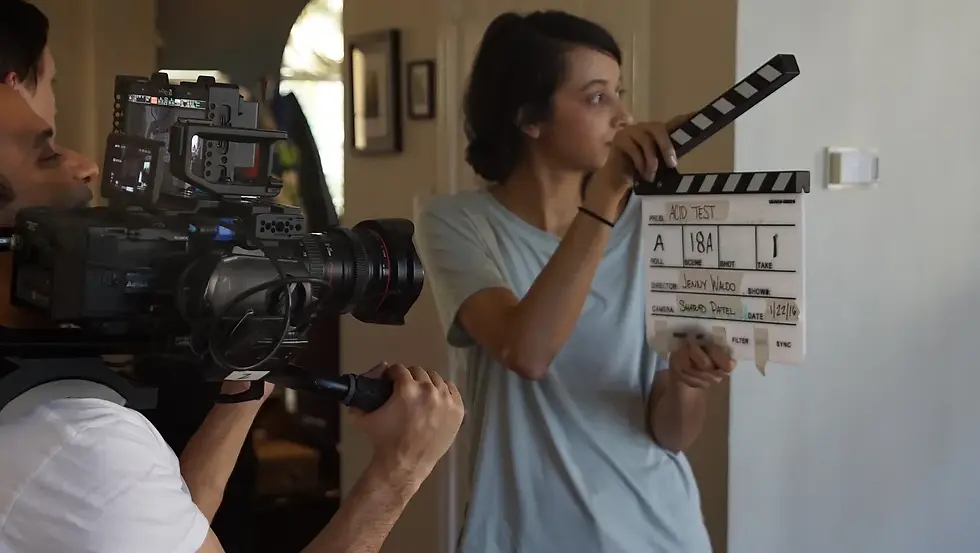
We used my house where my (2nd) husband and blended family lived. Our kids were 8, 9, 10, and 11 and I was shooting on a weekend the kids were at their other parents’ houses. I wasn’t full-time at Houston City College, I was just an adjunct and I was also working for a food science consulting company doing data analysis to pay the bills. In the decade since, my children have now all gone off to college. I’m not only a full time Filmmaking faculty at Houston City College but I was elected its Program Coordinator, and my house might never look as clean as it did when we had 30 people here filming.
One of the other aspects that scared me about the project was the VFX. I had never done anything with VFX before and I didn’t want the film to look cheesy with bad computer FX. The hallucination effects had to land, perfectly. Luckily, I was connected to a local filmmaker Sharad Patel - who is far more talented than anyone I know. He can teach himself anything, and he truly has an artistic eye. He could do the cinematography and the VFX and he became my collaborator and partner in this project. We crafted every image together through discussion before we shot. It took us a week to storyboard together off my terrible storyboards and with that we had a visual road map of the entire movie. We did test shoots. I wanted to make sure we had time to do this right so we took a 19 page script and shot every angle of coverage you can imagine over 6 days. We had a large concert scene with a trick shot in the middle and a bunch of extras that we had to make look like 100. I wanted to make sure we had options in post. With a background in documentary, I tend to have a higher shooting ratio so I can craft my story in the edit. It was a challenging production that I was excited and terrified for, but I had amazing people to lean on, especially my Assistant Director, Eddie Rodriguez who led the team.
Writing something that is personal is psychologically challenging. Letting people in on some of the more complicated core of my life - stuff I’m still working through in therapy - was an additional challenge, and resulted in some strange looks from my suburban mom friends. The day my Production Designer, Jessica Flores, finished “Jenny’s” bedroom, I cried. I had given her all the stuff I’d hoarded over my life and given her free rein to do whatever with it, but she put up something I had forgotten about that was from my first marriage (to my high school sweetheart) and it stopped me in my tracks. She asked if I wanted to take it down, but I said no. Or I’d think about it…I can’t remember. On Day 1 of production, I told the crew I might cry because of how personal it all was. I didn’t cry that day, but I cried the day we re-enacted the bedroom scene after the crazy tripping-with-my-parents when my mom came and lay down with me to comfort me.

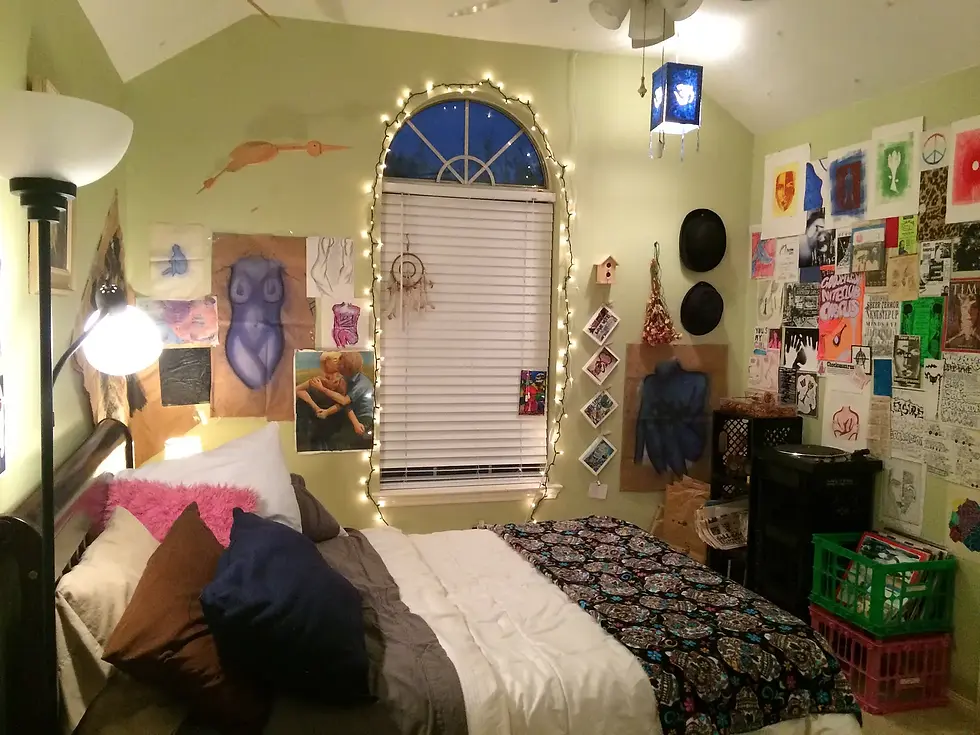
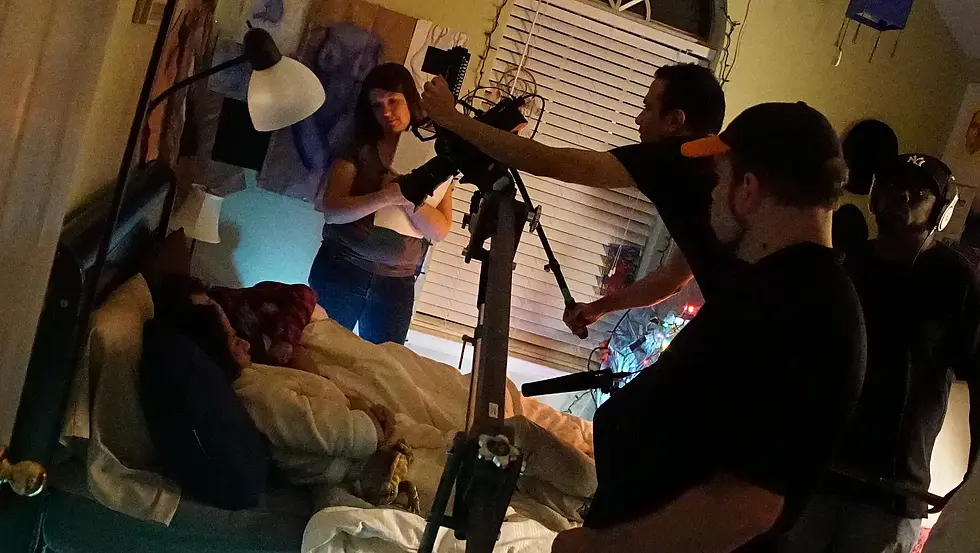
Casting was a particularly emotional challenge as well. I thought it would be hardest to cast “Jenny,” and while there were a few contenders and some wildly off-base auditions, as soon as Juliana DeStefano sent her tape in, I was hooked. She was originally from Houston but had moved to Los Angeles and I wanted to keep watching her, she captured whatever essence I was looking for. I didn’t necessarily see “me” in her, and honestly moving into production on this script (really any script) makes it less personal. It’s no longer me writing about my life but about this project and these characters that are coming to life through actors giving a performance and crew members practicing their craft.
I tend to cast open, but one of the things I was adamant about was that the mom had to be an immigrant, like mine. But I didn’t care if the mom in Acid Test was Czech, like my mom, just someone who could bring that cultural fear and outsider perspective and judgment about her “American” daughter doing something so different from what she could understand. We saw a lot of amazing options, but Mia Ruiz really was my mother in her mannerisms during her audition, and she matched with Juliana so well. Casting families is hard, but I think it’s important for the “suspension of disbelief” to cast people who look like they could be related even if in real life people often don’t look like their immediate family.
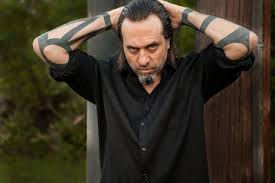
The most challenging role to cast was the dad, which echoes my own complicated relationship. My dad is both my best friend and my biggest nightmare. How do you capture that in a short film (or even a feature)? I needed an actor who could play both and all the auditions were only 1 side of the Jekyll-Hyde coin. In the years since, I realized I could’ve asked for a different read in the audition, but my gut instinct just wasn’t feeling what I needed from the auditions (even though they were great for what they were), until my Producer Jason Raschen recommended Patrick Sane, who had lived in Houston but had moved out to Los Angeles off the success from his work on Breaking Bad. Jason said “He’s a sweetheart!” and put us in touch. Now, if you Google Patrick Sane, you’ll see a headshot like this one, and with Jason’s comment about Patrick being a “sweetheart” juxtaposed against it, I knew it was going to work. It was such a joy to work with Patrick. We had a ton of fun and he came with a lot of stories.
One of my former HCC students came on to play the best friend, Jasmine Balais, and killed it. It’s been amazing to see her career grow into a social media influencer and filmmaker herself. Steel Herrera came on as the silent little brother and Jacob Hoving came in from Florida to play the friend who gives Jenny acid, and this short became the foundation of friendship and collaboration with the band Giant Kitty - I would go on to direct 3 of their music videos and they reunited to film scenes for the feature version of Acid Test.

My favorite days were the concert scenes. Dan Electros was such a cool venue and so generous letting us shoot there. We had a character we had to edit out of the project, which is a shame, but Kirby Guidry was a ton of fun to work with and there’s another story about his character that’s trying to find ways out and onto the page. I’ll be posting on social media some more photos to enjoy!
Production was a dream and I think the last day of filming - 1/30/16 - was an overnight shoot (I think the feature was as well!) and ended in a dreamlike state too. And then came the hard work - editing it together into something that would do well on the festival circuit and get us to the feature adaptation.
The edit took a long time, and we didn’t premiere until June of 2017. I wanted the edit to be choppy and kinetic, like Riot Grrrl music, but Sharad and I got stuck in the linear nature of the story. After a meeting at the SWAMP Business of Film Conference with Roberta Munroe, we hired her to consult on the edit and after she said “it’s paced like a feature film” when we needed it to live on its own as a short. This was such a crucial note that has changed my perspective on filmmaking!!! Sharad turned around a cut he called the “Bob Fosse edit” and we were in business!
We also needed more money and that launched my relationship with Seed&Spark and its founder Emily Best, among other collaborators and friends I’ve met in that community along the way. That first crowdfunding campaign was its own production and challenge and led to many more crowdfunding campaigns along the way. Such a learning curve that I’m so grateful for! Literally, I wouldn’t have gotten the writing job with Voyage Media if I hadn’t been contacted by Laura Somers who was shooting a Houston feature and saw my Seed&Spark and reached out for recommendations.
And then we premiered at the local Literally Short Film Festival before going wide - on Father’s Day! It was too perfect to have been scripted otherwise!

When you’re at the beginning of something, or even in the middle of it, it’s hard to see where things will take you. And there are so many things that you could never predict. My work developing Mustang Martha came to me in 2018 because of the success of the short film on the festival circuit. My work on my new short Twofer (currently in festivals) came because of my relationship with Austin Film Festival (where the short film and feature played) and SWAMP…with 10 years I can step back and see what I’ve been building as an artist, as a human. I’m so grateful.
Happy 10 year Anniversary of production on the short that changed my life and career!!


soicauxsmb24.com ừ đúng rồi, mình cũng chỉ lướt lướt thôi chứ không ngồi nghiền ngẫm. Nhìn chung trang chia phần theo tiêu đề ngày tháng khá rõ, kiểu mục “Soi cầu MB ngày 3 9 2026” đặt lên đầu nên vừa vào là biết họ đang nói đúng ngày nào, kéo xuống thì nội dung đi theo từng khối nên mắt đỡ bị loạn. Mình thấy họ có nhắc tới kiểu thống kê và phân tích kết quả các lần quay trước để đưa ra cặp số gợi ý, đọc vài dòng là hiểu đại khái hướng họ làm, không cần bấm qua nhiều nơi mới nắm được. Menu cũng gọn, chuyển qua lại giữa mấy mục không bị vòng…
Mình thỉnh thoảng cũng lướt mấy bài phân tích xổ số miền Bắc cho vui thôi, kiểu đọc để xem người ta suy luận thế nào chứ không đặt niềm tin 100%. Hồi trước toàn nghe bạn bè mách nước, bảo “cầu này ngon” là mình ghi đại, nhưng trật vài bận liên tiếp nên bắt đầu để ý hơn tới thống kê và cách giải thích. Có lần vô tình đọc một bài trên soicauxsmb.pro, mình mới thấy nhiều “cầu” thực ra chỉ là nhìn dữ liệu theo cảm giác, nên mình tự hạ kỳ vọng xuống. Từ đó mình coi việc xem số như giải trí, có chọn thì chọn ít, thử vận may là chính. Mình thích…